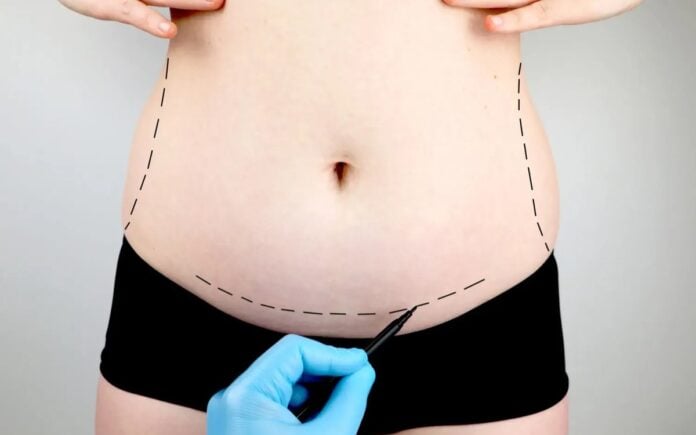
A bathroom scale reports one number, and that number can fall for months while the lower abdomen keeps its fold. Patients who reach that point describe a familiar mismatch: the weight is down, clothes fit better elsewhere, and the midsection still feels loose, heavy or out of step with the rest of the body.
That mismatch opens a Houston plastic surgery practice’s guide to abdominoplasty, the operation most people call a tummy tuck. The practice belongs to Leo Lapuerta, MD, FACS, a triple board-certified plastic surgeon with more than 30 years of experience, and it treats the tummy tuck as a structural repair. Read in order, the repair moves through the abdomen one layer at a time.
Layer one: the skin envelope
Skin stretched by pregnancy or by years at a higher weight does not always shrink back once the volume beneath it leaves. The practice calls this skin redundancy. You see it as a lower abdominal overhang, a crease that holds at a stable weight, or skin that folds when you sit down.
Exercise can build muscle under that skin, but it cannot take the skin away. In surgery, the surgeon lifts the lower abdominal skin and fat, repairs what sits underneath, and then removes the excess before closing with as little tension as possible.
Some stretch marks leave with the tissue. If the marks sit inside the skin being removed, most often on the lower abdomen, they go with it. The practice adds that the operation does not erase every mark across the abdomen, and that any stretch mark improvement is a by-product of removing skin.
Layer two: the abdominal wall
Beneath the skin and fat lie the abdominal muscles, and pregnancy can stretch them apart along the center of the abdomen. The result is a bulge that persists despite exercise and a midsection that feels unsupported. The practice lists separated and weakened abdominal muscles among the structural changes that exercise alone cannot correct.
In a full tummy tuck, Dr. Lapuerta repairs those muscles to restore support and narrow the midline. That step shapes recovery as well as the result. Patients may walk a little bent at the waist at first, and the practice stresses lifting restrictions in particular when the muscles have been repaired.
Layer three: the navel
Once the upper skin is drawn down and the excess removed, the belly button still has to sit where it belongs. In many full cases, the surgeon brings it through a new opening in the redraped skin. The practice calls this one of the most important technical details in abdominoplasty, because a well-shaped navel helps the result look balanced instead of surgical.
The repositioning leaves a small scar around the belly button. The main scar runs low across the abdomen near the pubic hairline, placed to sit beneath underwear or swimwear, and it looks more obvious in the early months before it matures.
The layer weight loss can reach
Fat is the one tissue diet and exercise can change, and the practice draws that boundary in plain terms. Asked whether a tummy tuck is a weight-loss procedure, the practice answers no and describes the operation as contouring. Good candidates are at a stable weight, close to their ideal, and want to change shape instead of losing more pounds.
The size of the repair varies with the anatomy. A mini tummy tuck suits minimal excess skin confined to the area below the navel. A full tummy tuck treats the whole lower abdominal skin envelope along with the muscles. An extended tummy tuck carries the excision toward the sides when loose skin wraps beyond the front, a pattern more common after major weight loss. If pockets of fat sit beside loose skin at the waist or flanks, the plan may add targeted liposuction to smooth the sides.
Each version trades a flatter contour for a surgical scar and a real recovery period, and like any operation it carries risks. Results hold best when weight stays stable; pregnancy, weight gain and large swings can change the outcome.
Judging the repair before it happens
Dr. Lapuerta argues that a surgeon’s experience with a specific procedure, counted in both cases and years, combined with board certification, is the best determinant of an outcome patients are happy with. He has performed more than 30,000 surgical and non-surgical procedures and teaches plastic surgery residents and fellows in Houston and Galveston.
His practice keeps more than 3,000 before-and-after images for patients to review. For someone weighing this operation, the useful comparison is an abdomen that started where theirs starts now: the same overhang, the same bulge at the midline, the same navel stretched out of shape.
This article is for general information only and is not medical advice. Results vary from patient to patient. Consult a board-certified plastic surgeon or your physician about your own situation. Written in partnership with Joseph Lambert, a publicist working with Leo Lapuerta, MD Plastic Surgery.