When it comes to pricing loans, the more information the better. Larger economic trends, like economic forecasts and foreign markets, are important for longer-term loans. However, the borrower’s information is just as important. Financial information, debts, and credit history are all relevant factors in how to price a loan. In order to get as much as you can, lenders have traditionally relied on a tri-merge credit report. This method involves ordering information from the major 3 credit bureaus: Equifax, Experian, and TransUnion. Once the information is received, the middle of the 3 credit scores is used to determine loan eligibility and pricing.
While using 3 credit bureaus may seem excessive, having less information can be extremely impactful. For example, it is estimated that 18% of consumers had a credit score discrepancy of 20 points or more when comparing tri-merge and bi-merge scores. Having a score discrepancy of over 20 points guarantees that a consumer gets put in a higher or lower pricing bucket. This equates to either the borrower being overcharged or the lender leaving money on the table.
Ultimately, pricing a loan is a difficult task that requires the most accurate information possible. To make sure that credit scores are the most accurate, relying on a tri-merge credit report is the best way to go.
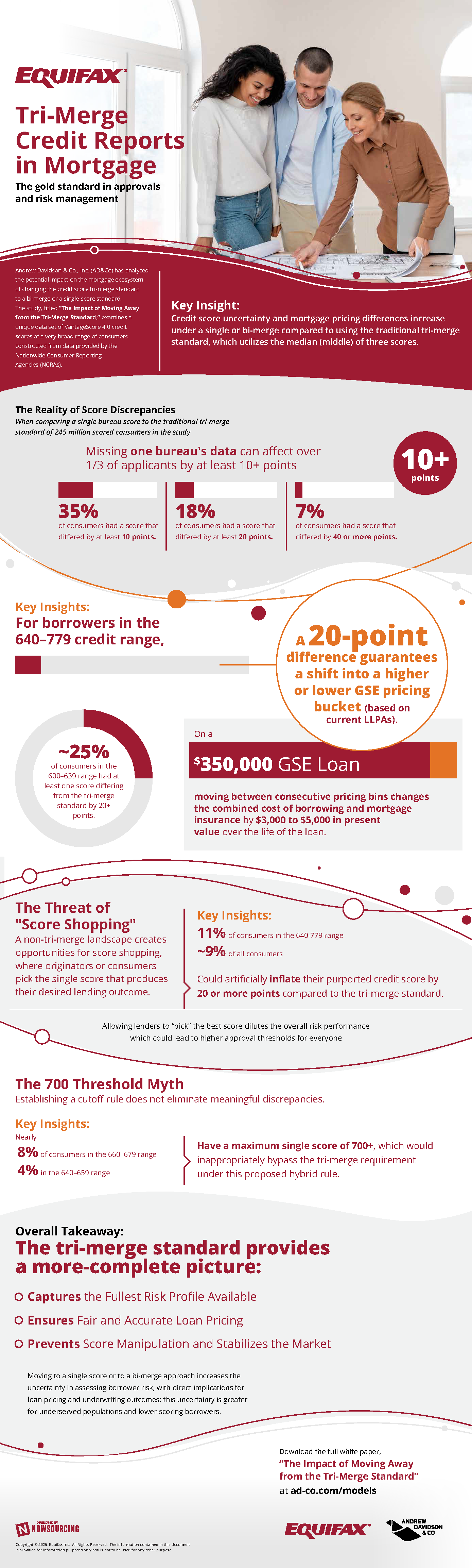
Source: Equifax