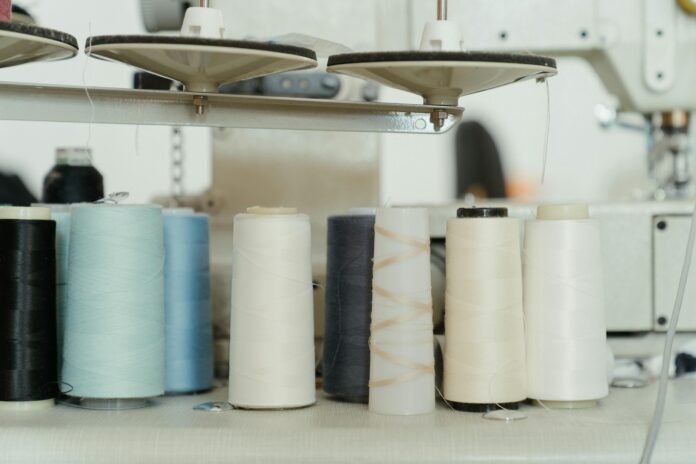
When we look at a high-end jacket or a pair of heavy-duty work pants, our eyes usually go straight to the fabric, the cut, or maybe the buttons. We notice the weight of the denim or the soft hand-feel of the cotton, but we rarely spare a thought for the miles of fiber holding the whole thing together. Yet, in the world of high-volume garment production, thread choice is often the most scrutinized decision made before a single machine starts humming.
For a clothing manufacturer, thread is not just a utility; it is a variable that dictates whether a shift is profitable or a total disaster. If a seam fails, the entire garment is essentially trash, regardless of how expensive the textile was. This is why sourcing the right commercial sewing thread is a balancing act of chemistry, physics, and sheer trial and error.
If you have ever wondered why some clothes feel indestructible while others seem to dissolve after three trips through the laundry, the answer usually hides in these five factors.
1. Tensile Strength vs. Machine Speed
Modern industrial sewing machines are terrifyingly fast, often hitting 5,000 stitches per minute. At that speed, the friction and heat generated at the needle eye are enough to melt low-quality synthetics. If a thread lacks serious tensile strength or has even a tiny inconsistency in its diameter, it’s going to snap.
Every time a thread breaks, the whole production line stops. An operator has to re-thread the machine, which might take a minute, but when you multiply that by hundreds of machines over an eight-hour shift, the lost productivity is massive. Manufacturers look for loop strength—the ability to stay intact even when being yanked into the tight shapes required by a lockstitch. If the thread can’t survive the machine, it never even gets a chance to survive the consumer.
2. The “Marriage” to the Fabric
You can’t just use the same thread for a stretchy gym legging that you’d use for a stiff work shirt. The fiber content of the thread has to play nice with the base fabric to avoid a disaster known as pucker.
Most high-volume shops lean on corespun thread—basically a high-strength polyester filament core wrapped in a softer polyester or cotton jacket. It’s the best of both worlds: the strength of a synthetic with the heat resistance of a natural fiber. However, if a brand is doing “garment-dyeing” (coloring the clothes after they are sewn), they have to use 100% cotton thread. If they used a polyester blend, the fabric would take the dye, but the seams would stay white, ruining the entire batch in one go.
3. Surviving the Life of the Garment
The thread has to survive more than just the sewing machine; it has to survive the person wearing it. This is where the environment comes in. Swimwear and outdoor gear makers are obsessively focused on UV resistance and chlorine tolerance.
Standard polyester will eventually go brittle and snap if it’s constantly baked in the sun or soaked in pool chemicals. In these cases, manufacturers opt for bonded nylon or specially treated polyesters that can handle the bleaching effect of the elements. Similarly, for industrial workwear that gets hit with high-heat commercial washers and aggressive detergents, the thread has to have zero shrinkage. If the thread shrinks more than the fabric during a hot wash, the seams will pull and distort, turning a straight hem into a wavy mess.
4. Friction and Lubricity
If you look closely at a seam, you are seeing a complex interaction of loops. To create a consistent stitch, the thread needs a specific level of slickness. If a thread is too “hairy” or rough, it won’t form a clean loop for the bobbin hook to catch.
Manufacturers look for threads that have been treated with high-quality lubricants like silicone or wax. This serves two purposes: it lets the thread glide through the tension discs without snagging, and it helps bleed off the heat at the needle. Without that lubrication, the needle can actually get hot enough to melt the fabric. The goal is a flat seam that sits flush against the skin, which only happens when the thread behaves predictably.
5. The Stretch Factor
With everyone living in athleisure clothing, elasticity has become a top-tier factor. If you sew a high-stretch fabric with a rigid, non-stretch thread, the first time the wearer pulls on those leggings, you’re going to hear a chorus of popping seams.
To solve this, manufacturers use textured threads or bulked yarns in the looper of the machine. These have a natural spring to them, letting the seam expand and contract along with the fabric. The challenge is ensuring the thread has enough give without losing its recovery. You want the seam to stretch, but you don’t want it to stay stretched out, which leads to a sagging, sloppy-looking garment.