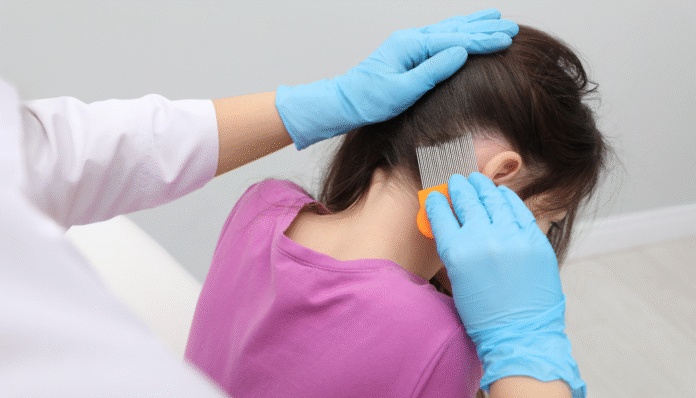
When you find that first louse in your child’s hair, your brain immediately shifts into crisis management mode. There is the panic, the disgust, and then the inevitable mental calculation of how to get rid of it as fast and as cheaply as possible.
Your first instinct is likely to drive to the nearest pharmacy. You stand in the aisle, staring at the boxes of shampoos and combs, and you see a price tag of $20 or $30. Then, you look up the price of a professional clinic, and you see a number that is significantly higher. On paper, the choice seems obvious. Why pay a professional hundreds of dollars when you can solve the problem yourself for the price of a pizza?
Here is the hard truth that thousands of parents learn the hard way: the price on the box is rarely the final cost. The DIY route is often a financial trap, filled with hidden costs, repeated purchases, and lost wages. When you factor in the reality of “super lice” and the value of your own time, a professional lice treatment often turns out to be the most financially sound decision you can make. It is the difference between a one-time expense and a recurring financial drain.
Here is a breakdown of the real-world economics of lice removal, and why the “expensive” option is actually the smart investment.
The High Cost of Failure
The biggest variable in the cost equation is efficacy. If the product you buy doesn’t work, it wasn’t cheap—it was a waste of money.
Unfortunately, the vast majority of over-the-counter (OTC) products rely on pesticides called pyrethroids. Over the last few decades, lice populations across the United States have mutated to develop a genetic resistance to these chemicals.
This leads to a cycle of spending that looks like this:
- You buy the first kit ($25). It kills some live bugs, but leaves the eggs (nits) and the resistant adults.
- Three days later, the lice are back. You assume you did it wrong, or that you need a “stronger” brand. You buy a different kit and maybe some home remedy ingredients like olive oil or mayonnaise ($35).
- A week later, the infestation is still active. You are now out $60, and you are exactly where you started.
A professional clinic typically uses heated-air technology or advanced dehydration methods that kill lice and eggs physically, not chemically. Lice cannot develop immunity to dehydration. You pay once, and the problem is solved.
Calculating the Cost of Missed Work
This is the single most expensive hidden cost of a lice infestation. Effective DIY treatment is not a 30-minute job. It is a days-long process. To do it right, you have to manually comb out every single nit from your child’s head. If you miss three eggs, the infestation restarts. For a parent doing this for the first time on a squirming child, a thorough comb-out can take 3 to 5 hours. And because OTC products don’t kill eggs, you have to do this daily for at least a week to catch the hatchlings.
Do the math on your time:
- Do you have to take a day off work because your child’s school has a “no-nit” policy?
- Do you have to skip a shift to stay home and comb?
- If you are a freelancer or hourly worker, what is your hourly rate multiplied by the 15-20 hours you will spend combing over the next two weeks?
For many families, the “lost wages” from a DIY battle far exceed the cost of a 90-minute appointment at a clinic. A clinic gets your child back in school immediately and gets you back to work.
The Family Spread Multiplier
Lice are highly contagious. When you attempt to treat a child at home, you are in close, prolonged contact with the infestation. You are leaning over them, sharing towels, and hugging them for comfort.
It is incredibly common for a DIY-treating parent to accidentally catch lice themselves, or for the infestation to jump to a sibling before the first child is cured.
Suddenly, you aren’t treating one head; you are treating three. You are now buying triple the amount of product and doing triple the amount of laundry. A professional clinic offers a sterile environment. They can screen the entire family at once, identify exactly who has it (and who doesn’t), and treat the affected members simultaneously. This containment strategy prevents the infestation from ping-ponging around your house for a month, saving you the exponential costs of a family-wide outbreak.
The Laundry and Utility Bill Spike
While the lice live on the head, the fear lives in the house. Parents fighting a home infestation often go into a cleaning frenzy. They wash every sheet, towel, pillowcase, and piece of clothing in hot water and dry them on high heat, every single day for a week.
This puts a massive strain on your utilities. The cost of the extra water, the electricity or gas for the dryer, and the bottles of detergent add up. While this cost is “hidden” in your monthly utility bill, it is a real expense directly tied to the duration of the infestation. The faster the lice are gone, the sooner you can stop the “sanitation marathon.”
The Value of a Guarantee
When you buy a box of shampoo from the drugstore, there is no warranty. If it doesn’t work, the store won’t give you your money back, and the manufacturer certainly won’t come to your house to fix it. You bear 100% of the financial risk.
Reputable lice clinics operate differently. Because they are confident in their technology and their technicians, they typically offer a service guarantee. If the lice return within a specific window (usually 30 days), they will retreat you for free. This is financial insurance. It ensures that your investment yields the result you paid for: a lice-free head.
It is easy to look at the upfront price of a service and feel sticker shock. But wise financial decisions are based on the total cost, not just the initial fee.
When you add up the cost of multiple failed box kits, the hours of lost wages, the utility spike, and the sheer emotional toll of a multi-week battle, the “cheap” option becomes incredibly expensive. A professional clinic offers a predictable, fixed cost for a guaranteed result. In the chaotic world of parenting, that kind of certainty is worth every penny.